

One piece of advice I’d give anyone entering law school, or even someone who has a nudge to understand the law: read. And read as much as you can.
Read the lawyers who came before you. Read about the people who shaped the profession, the judges who stood by their convictions, and the standards they established for generations to follow. Read about how laws were framed, why certain provisions came into existence, and the circumstances that shaped the legal system we have today.
Law school will introduce you to subjects, statutes, cases, principles and theories. But there is so much about the law that you won’t necessarily learn in a classroom. Some of the most valuable lessons come from reading about the people, events and ideas that shaped it.
I’ve been fortunate to have friends who are avid readers. Over the years, their reading habits and recommendations have encouraged me to pick up books I might not have otherwise considered.
If you are just starting out with reading, here’s something that helped me:
Join a book club or a reading community. I was part of the Lawctopus Book Club, an online initiative that has since been discontinued. Bhopal has its own reading community, and there is Shantanu’s Book Reading Club, with chapters in Mumbai, Pune, Bengaluru and Jaipur. Look for communities around you. Reading becomes considerably easier when you have people to discuss what you’ve read with. Also, do not make the mistake of getting 10 books. Never ends well.
With that, here are some books I’d strongly recommend to anyone interested in law. You don’t necessarily have to be a law student to read them. In fact, some of these books are just as relevant to anyone interested in understanding society, institutions, governance and justice.
1. Read about the people who shaped the legal profession
Before you begin forming your own ideas about what it means to be a lawyer, spend some time understanding the people who practised before you.
Their experiences, professional choices, convictions and disagreements offer a glimpse into what the profession has stood for and what it can aspire to be.
I’d particularly recommend:
1. Before Memory Fades – Fali S. Nariman
An autobiography by one of India’s most distinguished advocates. Nariman sahab writes about his experiences at the Bar, important cases, the Constitution, the judiciary and the relationship between law and politics. It is also a valuable account of the responsibilities that come with being a member of the legal profession. It’s a beautiful memoir, where he talks about the architecture of the high court to start with, different statues of Lady of Justice, to how he navigated in the profession working in the chambers, his seniors, his colleagues; reflections on the Constitution & Indian judiciary of the time. Love his wit!
His other writings include: Beyond the Courtroom, You must know your Constitution.

2. Nani Palkhivala: The Courtroom Genius (Soli J. Sorabjee and Arvind P. Datar)
A biographical account of Nani A. Palkhivala’s life and legal career, tracing his journey as one of India’s most celebrated constitutional lawyers. The book explores some of the landmark cases he argued and offers insights into his preparation, courtroom craft, working methods and approach to advocacy. A worthwhile read for anyone who wants to understand the standards set by the lawyers who shaped the Indian legal profession.
More books on Palkivala: Rethinking Palkivala Centenary Commemorative Volume
3. Roses in December – M. C. Chagla
First Indian Chief Justice at the Bombay High Court. The book traces his journey from his early years and education at Oxford to his legal practice at the Bombay Bar, judicial career and eventual involvement in public life.
What makes this particularly interesting for law students is the account of his experiences as a lawyer and judge, his interactions with prominent personalities of the time, and his reflections on the judiciary, politics, constitutional values and India’s changing political landscape. It also offers a glimpse into the legal profession during the years surrounding India’s independence.
4. On Balance – Leila Seth
An autobiography by Justice Leila Seth, the first woman to become Chief Justice of a state High Court in India and the first woman judge of the Delhi High Court.
What makes this book particularly interesting is its account of the challenges she navigated as a woman entering and establishing herself in a largely male-dominated legal profession. She also reflects on her experiences as a judge, her involvement with the Law Commission, and her work on issues concerning women’s rights and social justice.
Additional read: Talking of Justice: People’s Rights in Modern India– this one engages more directly with questions of justice, rights and the legal issues she encountered through her career.
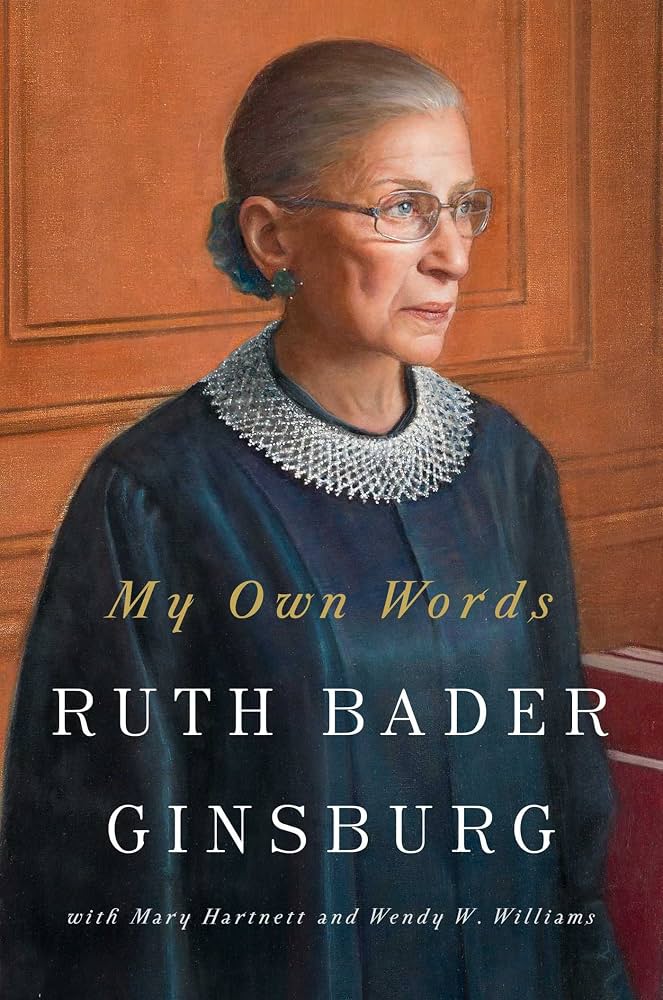
5. My Own Words – Ruth Bader Ginsburg
A collection of writings, speeches and reflections by Ruth Bader Ginsburg, the second woman to serve as a Justice of the US Supreme Court and a prominent advocate for gender equality. The book offers insights into her legal philosophy, judicial approach, advocacy for women’s rights and her journey through the legal profession. Although rooted in the American legal system, her work offers valuable perspectives on equality, constitutional interpretation and the role of law in bringing about social change.
These books aren’t just biographies to be read and put away. Pay attention to how these individuals approached their work, the positions they took, the principles they defended and the professional standards they upheld.
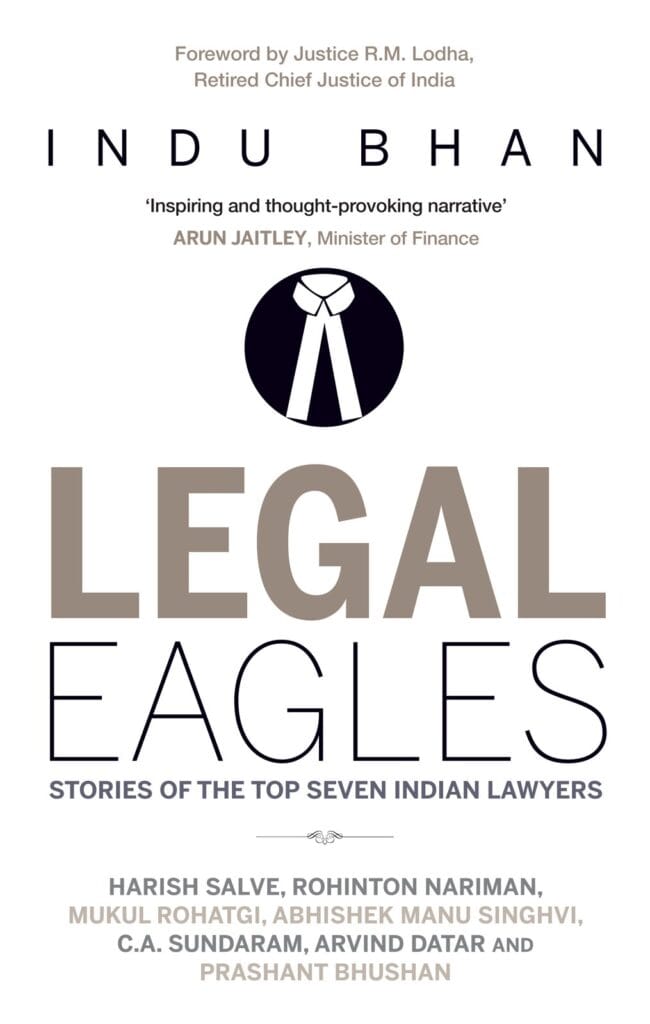
6. Legal Eagles: Stories of the Top Seven Indian Lawyers – Indu Bhan
An easy-to-read introduction to the lives and professional journeys of some of India’s prominent lawyers. The book offers a glimpse into their careers, experiences, achievements and contributions to the legal profession. A good starting point for law students who want to familiarise themselves with the people who have shaped Indian legal practice without beginning with dense legal or academic writing.
2. Understand how laws came into existence
Studying a provision in a bare act is one thing. Understanding why that provision exists, what circumstances led to its enactment, and how it has evolved is another.
If you want to understand the law, you must develop an interest in its history, politics, social context and evolution.
Here are a few books I’d recommend:
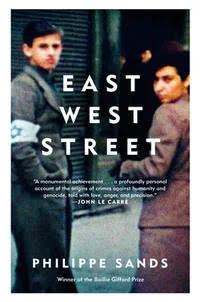
6. East West Street: On the Origins of Genocide and Crimes Against Humanity – Philippe Sands
An account that traces the origins of the legal concepts of genocide and crimes against humanity through history, personal narratives and international legal developments. Philippe Sands weaves together the lives of individuals, the history of the Second World War and the development of international criminal law. It is a fascinating way to understand how historical events can shape international law.
A personal favourite: This was one of the books I read as part of the LLS Book Club. We also had the opportunity to interact with Philippe Sands after reading the book, and I must admit, it was quite a fan moment! Getting to hear directly from an author whose work you’ve spent time admiring makes the experience all the more special.
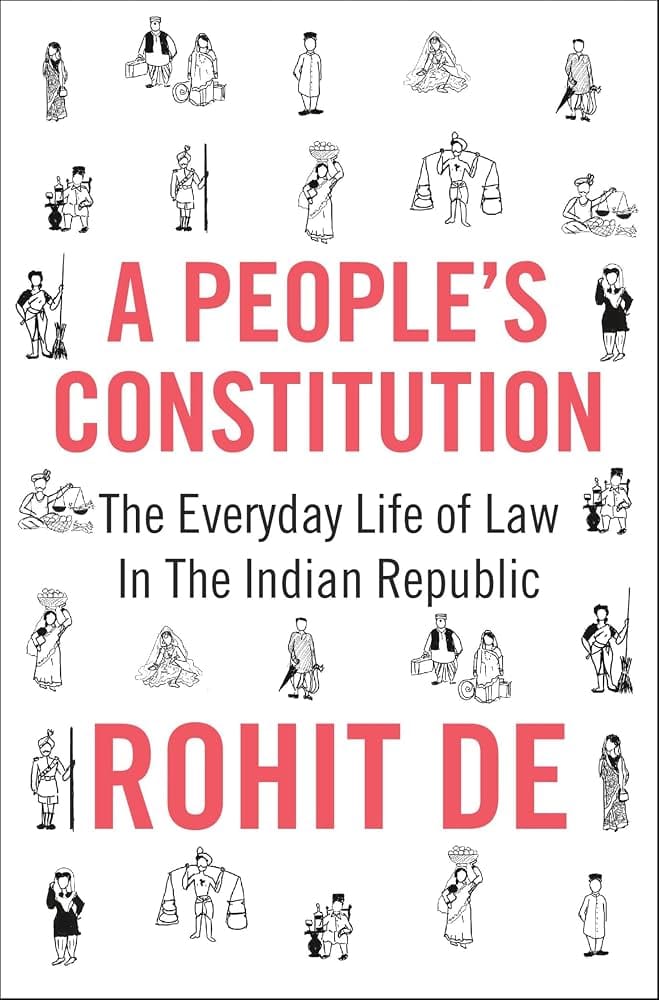
7. A People’s Constitution: The Everyday Life of Law in the Indian Republic – Rohit De
An especially interesting book for anyone studying Indian constitutional law. Rather than looking at the Constitution only through landmark judgments and the Constituent Assembly, Rohit De explores how ordinary Indians engaged with constitutional rights and used the courts in the early years of the Republic. He goes to the backdrop, the backend of the judicial system. One wouldn’t know this until they’ve been in the position of working there or have close association with somebody who does. Very insightful, again!
It helps you see the Constitution as something that operates in people’s everyday lives, not merely as a document studied in classrooms.
8. The Indian Constitution: Cornerstone of a Nation – Granville Austin
A significant work on the making of the Indian Constitution, the debates surrounding it and the ideas that informed its framing. If you want to understand the historical and philosophical foundations of the Indian Constitution, this is worth picking up.
9. Learning the Law – Glanville Williams
A particularly useful starting point for someone entering law school. It introduces readers to the nature of legal study, legal reasoning, research, reading cases and approaching the subject of law. It’s an overview, a good to read.
It is one of those books I’d recommend reading early rather than waiting until you are halfway through your degree.
3. Read judgments and understand how the law evolves
A lot of what we understand about constitutional rights, individual freedoms and the legal system has developed through judicial interpretation.
Reading judgments is an important habit to develop, even if you initially find them difficult to follow. Start with landmark decisions and try to understand the questions before the court, the reasoning adopted and the implications of the decision.
You can begin with:
10. 10 Judgements That Changed India – Zia Mody
A useful introduction to landmark judgments that have shaped India’s constitutional and legal landscape. It helps readers understand how particular judicial decisions have influenced the country’s institutions and public life.
You could also explore Landmark Judgments that Changed India by Justice A. K. Ganguly.
Don’t just read the case summaries. Whenever possible, go back to the original judgment. Pay attention to the arguments, the reasoning and the principles laid down. Over time, you’ll develop a much better understanding of how courts interpret and apply the law.
Our Constitution Law Professor suggested us at the university, make it a habit of reading one judgement, whatever it be, every single day. And I’d pass it on here.
4. Read beyond textbooks: Law, literature and society
Not every book that makes you a better law student needs to have the word ‘law’ in its title.
Literature, philosophy, history and political writing can teach you a great deal about human behaviour, institutions, power, justice and the consequences of decisions.
A few other books to consider:
11. The Trial – Franz Kafka
A classic that explores an individual’s experience of an opaque and inaccessible judicial system. It is a work of fiction, but it raises interesting questions about authority, bureaucracy, procedural fairness and the relationship between individuals and institutions.
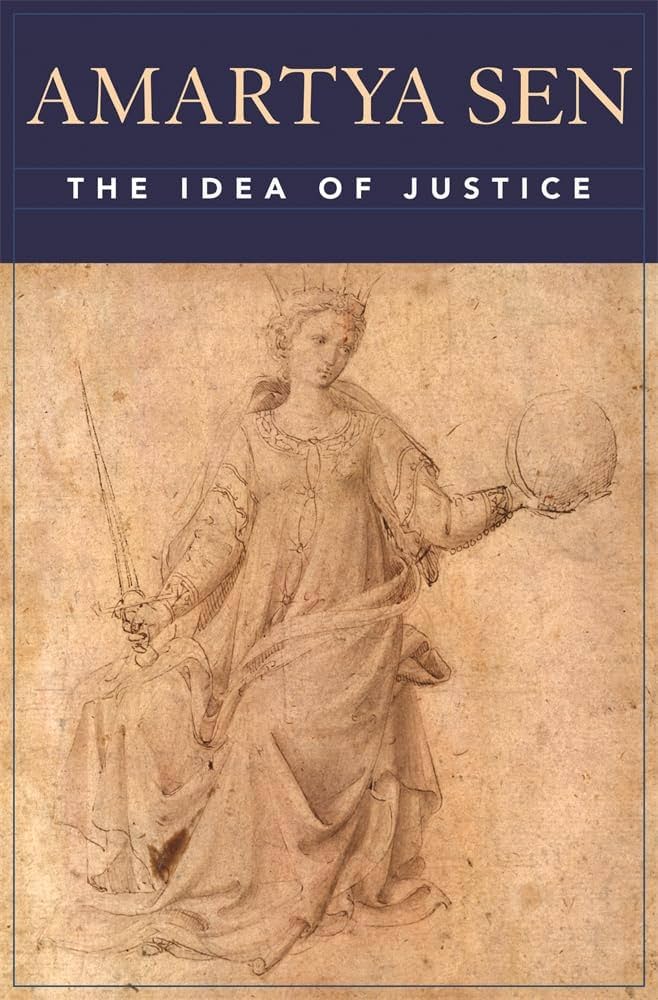
12. The Idea of Justice – Amartya Sen
A thought-provoking exploration of justice, fairness and the ways in which societies should approach questions of equality and injustice. It encourages readers to look beyond idealised theories and consider the realities of how justice works.
13. Justice: What’s the Right Thing to Do? – Michael J. Sandel
An accessible introduction to moral and political philosophy through real-world dilemmas. It is a good way to start thinking critically about questions that frequently arise in law: rights, fairness, individual liberty and collective responsibility.
These books will not teach you how to draft a petition or argue a matter in court. But they will help you think about the questions that make those activities meaningful in the first place.
You could also check out books by Gautam Bhatia, Justice DYC,
5. How to actually build a reading habit
One thing I’d emphasise is that you don’t need to read all these books in your first year. This isn’t a checklist to complete before your next semester examination.
A few things that might help if you’re just starting:
- Start with one book. Pick something that genuinely interests you. Don’t buy an entire reading list at once.
- Read beyond your syllabus. Your prescribed readings are important, but don’t let them become the boundaries of your curiosity.
- Keep a reading journal. Note down interesting arguments, passages, questions and ideas. You don’t have to write a review of every book.
- Join a reading community. Find people who read and discuss books. Having conversations about what you’ve read can make the experience much richer.
- Don’t be afraid to leave a book unfinished. If something isn’t working for you, pick up another book and return to it later.
- Read consistently. Even 10–15 minutes a day is a good place to start.
Most importantly, don’t read just to add another title to your LinkedIn profile or to tell people you’ve read a particular author. Read to understand. Read to question. Read to develop your own perspective.
A final thought
If you’re entering your first year of law school, or you’re someone who has always been curious about the law but hasn’t quite known where to begin, start reading. It will widen your horizons, much beyond to what classrooms would do.
You don’t have to agree with every author. You don’t have to admire every lawyer whose autobiography you pick up. In fact, some of the most valuable reading comes from encountering ideas you disagree with and understanding why.
The legal profession has a long history, and you are entering a field shaped by generations of people before you. Understand what they built, what they stood for, where they fell short and what they left behind.
And then, hopefully, contribute something of your own.
And if this reading list helps, I’ll be waiting for you to come back and comment about all those paragraphs you’ve been bookmarking, the books you’ve picked up, or the ones you think I should add to this list.